Guddat Shoreline Approval Faces November 11 Appeal Deadline
November 11 is the City’s advertised deadline to appeal its conditional approval of the Guddat shoreline home project on Broomgerrie Road, where the Suquamish Tribe raised concerns about tree loss, sediment runoff, and nearshore salmon habitat impacts. The City says revised plans, environmental studies, and restoration requirements address the project’s impacts.
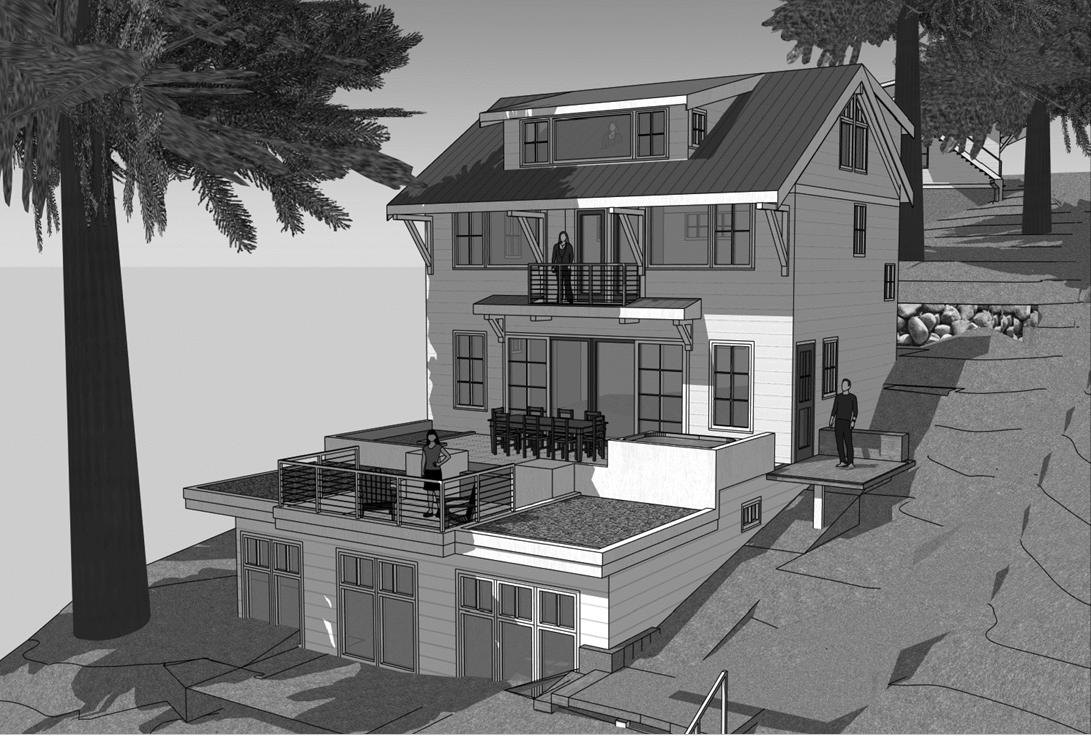
The project at 10732 NE Broomgerrie Road would replace an existing home, expand its footprint landward, install a septic system, and add a carport with rainwater-storage tanks below. The City’s final staff report and exhibits explain its conditional approval of a shoreline substantial development permit and recommendation to approve a shoreline variance, which requires Department of Ecology review.
Tribe Questions Habitat Protection
In December 18, 2023 comments, Suquamish Tribe biologist and ecologist Rod Malcom asked why the replacement home could not move farther from the shoreline. He warned that construction and large-tree removal outside the shoreline buffer could still affect ecological functions within it.
The Tribe sought a fuller accounting of vegetation losses, including tree sizes, canopy coverage, proximity to the water, and how long replacement plantings would take to restore lost functions. The Tribe also raised the risk of sediment reaching the shoreline during and after development on land mapped for erosion and landslide hazards.
The Tribe challenged the environmental consultant’s assertion that no special management measures were needed for listed species, pointing to likely juvenile Chinook salmon use of the nearshore. Puget Sound Chinook salmon are listed as “threatened” under the federal Endangered Species Act. The Tribe’s comments questioned the adequacy of the environmental analysis without declaring opposition to all redevelopment.
The City concluded that moving the entire home to a new footprint would cause greater disturbance within the landslide-hazard area than rebuilding largely in place. Staff cited subsequent ecological, tree-protection, and geotechnical reports, and accepted a 486.6-square-foot landward footprint expansion under rules allowing a one-time expansion of up to 500 square feet.
Tree Removal Comes With Restoration Requirements
The revised tree inventory proposes retaining and protecting 17 of 26 trees. Six would be removed as invasive, two as high-risk or dead, and one for construction.
The staff report says the 50-inch western red cedar proposed for removal is not a high-risk tree, but is incompatible with demolition and construction. Its diameter exceeds the City Code’s threshold for a landmark western red cedar, whose removal, where the landmark-tree ordinance applies, is prohibited without City approval.
Although the property’s R-2 zoning exempts it from the standalone landmark-tree ordinance, the Shoreline Master Program separately prohibits removing landmark trees to accommodate enlargement or expansion of a nonconforming home. The report nevertheless states that no landmark trees would be removed because of the expansion, without clearly explaining how it distinguishes this cedar’s removal from expansion-related removal. Project approval requires proof of an attempted donation of the trunk to a local Tribe.
The City accepted mitigation intended to prevent a net loss of shoreline ecological functions, including replacing invasive vegetation with native plants and protecting retained trees and their roots. Conditions require 1,572 square feet of planting associated with the home project and a separate permit the City issued retroactively for bulkhead work performed without the required approval. Some shoreline planting has already been completed; upland planting is deferred until after home construction to protect its survival.
The approval requires financial security for planting performance and maintenance, five years of monitoring, and annual reports. Areas where more than 20% of plantings fail must be replanted. These requirements make restoration an ongoing obligation beyond construction.
Neighbors Raise Water and Clearing Concerns
Attorney Michael Rea, representing adjacent owners Dale and Carol Sperling, questioned excavation, groundwater impacts, tree clearing, septic-drainfield setbacks, and whether a smaller project could avoid environmental damage. He also disputed the need and feasibility of the rainwater system.
The City says the March 23 objection letter filed by the Sperlings prompted a change from a shoreline exemption to a substantial development permit. The report identifies 262 cubic yards of earth disturbance, above the 250-cubic-yard exemption threshold.
The staff report says Kitsap Public Health approved the septic drainfields and rainwater-catchment system, although the City’s responses do not detail how each objection was resolved. Approval also requires stormwater and erosion-control plans reviewed by the geotechnical engineer, drainage safeguards, and a procedure for draining hot-tub water that prevents prohibited discharges to storm drains or the septic system.
Most public comments supported the project. Neighbors, relatives, and friends described an aging cabin, a longstanding family connection to the shoreline, and confidence that rebuilding could meet environmental requirements.
Appeal Deadline and Remaining Review
As of November 5, the City’s re-notice directs appellants to submit written grounds and a $530 fee to the City Clerk by November 11, 2026. That date is Veterans Day. Holiday filing arrangements and whether the holiday changes the deadline remain unconfirmed; anyone considering an appeal should contact the Clerk promptly rather than assume an extra day.
This is an appeal period, not a new general public-comment period. After acknowledging an incorrectly shortened June comment window, the City issued a corrected notice ending comments August 10 at 4 p.m. No reopened general comment period was identified.
A separate 21-day state appeal period is tied to Ecology’s formal variance decision and filing notice. No project-specific Ecology decision was located in the records reviewed, so that deadline remains undetermined. Additional construction permits and applicable shoreline review and appeal requirements must be addressed before work can proceed.
Discover more from Bainbridge Island Environmental News
Subscribe to get the latest posts sent to your email.